15 states, 6 Pacific islands. Click the map to see where WICHE is at work in your area. As a regional interstate higher education compact, WICHE collaborates with partners across the West to share knowledge, create resources, and develop innovative solutions that address some of our society’s most pressing needs.
Save on Tuition in the West
More than 52,000 students saved a total of $703 million in academic year 2025-26
WICHE helps make college more affordable and accessible for students in the West at the undergraduate, graduate, and professional studies levels through its tuition savings programs. Connecting students to educational opportunities in order to address regional workforce needs is the initiative that established WICHE in 1953 and remains central to its mission today. With hundreds of colleges and univerisities in the region particpating in these tuition savings programs, students have more choice than ever. And because WICHE offers postsecondary institutions the ability to decide how they participate, state and campus leaders can tailor participation to strategically meet campus needs.

WUE made attending my dream university possible by removing the financial barrier of going out of state. Visiting Oregon State University confirmed it was the right place for me, and with WUE the cost was manageable for my family. It allowed me to pursue the college experience I’d hoped for.
Raegan Colorado Resident, Kinesiology, Oregon State University
Our Mission
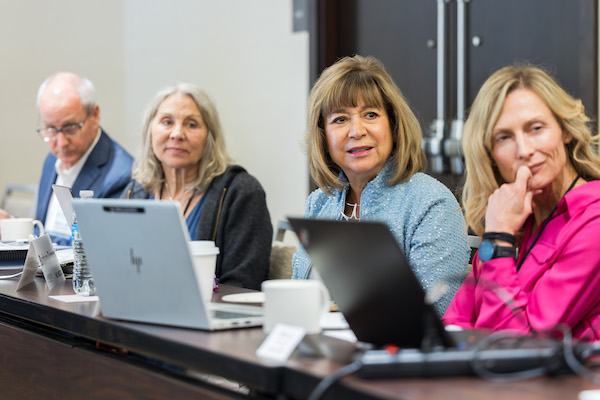
The Western Interstate Commission for Higher Education (WICHE) works collaboratively to expand educational access and excellence for all residents of the West. By promoting innovation, cooperation, resource sharing, and sound public policy, WICHE strengthens higher education’s contributions to the region’s social, economic, and civic life.
Our work is guided by these strategic priorities:
- Affordability & Finance
- Access & Success
- Workforce & Society
- Innovation
- Value & Accountability
Serving the West
Our Work
Under the direction of the WICHE Commission, our staff oversees programs and services, activities, projects, and other key initiatives that strengthen postsecondary education and workforce development of the West, all of which are intended to advance WICHE’s mission.
Upcoming Events
November 2026 Commission Meeting
05
Nov 2026
The Commission convenes in November 2026 to discuss and vote on action items pertaining to the diverse set of activities, projects, and initiatives that the Commission has prioritized as the focused goals and objectives for the WICHE region. For...
Western College and University Chief Academic Officer Policy Call
13
Nov 2026
WICHE’s Programs and Services Unit in conjunction with the Policy and Analysis Research staff offer a monthly call for chief academic officers to discuss issues related to federal and state policy updates and how they may impact postsecondary institutions...
Clarity in the Chaos: Aligning Students, Mission, AI, and Integrity
02
Dec 2026
Hosted in partnership with Honorlock. While 85% of institutional AI policies remain focused on academic integrity and plagiarism1, leaders and practitioners face a growing list of challenges—from regulatory shifts and managing change to persistent misconceptions about digital learning, assessment...
Western College and University Chief Academic Officer Policy Call
09
Dec 2026
WICHE’s Programs and Services Unit in conjunction with the Policy and Analysis Research staff offer a monthly call for chief academic officers to discuss issues related to federal and state policy updates and how they may impact postsecondary institutions...
Latest News
News Release
A Statement on the Passing of former WICHE Commissioner Catherine Dinauer
05
Oct 2026
Statement from WICHE President Demarée Michelau: I am writing to share the sad news about the recent passing of Catherine Frances “Cathy” Dinauer, Executive Director of the Nevada State Board of Nursing. During her service as a WICHE Commissioner...
News Release
DJ Campbell, Vice President for Sanford Health, Appointed to WICHE Commission
03
Sep 2026
BOULDER, Colorado – DJ Campbell, Vice President and Chief Human Resources Officer for Sanford Health, has been appointed to the Western Interstate Commission for Higher Education (WICHE) by Gov. Kelly Armstrong. Alongside his role at Sanford Health, Campbell serves as the Vice...
Media Mentions
America’s College Enrollment Map is Being Redrawn
22
Aug 2026
An article from Axios summarizes the regional impact of a declining pool of high school graduates on higher education institutions. Data from Knocking at the College Door: Projections of High School Graduates is cited. View original source.
Media Mentions
American Colleges are Facing an Enrollment Crisis as Young People Turn to Trades
21
Aug 2026
An article from the New York Post discusses how two-year vocational programs have become viable alternatives to traditional four-year degrees. Data from Knocking at the College Door: Projections of High School Graduates is cited. View original source.